ADVANCED ULTRASOUND ASSESSMENT, ULTRASOUND-GUIDED INJECTIONS

ultrasound-guided cosmetic injections
Facial ultrasound is changing the way injectable treatments can be assessed, planned and performed.
Traditionally, dermal filler treatments rely on a provider’s knowledge of facial anatomy, careful assessment and injection technique. High-frequency ultrasound adds another layer of information by allowing trained providers to visualize anatomy and existing filler beneath the skin in real time.
At Uplifted Medical, ultrasound may be incorporated into injectable treatments when appropriate to help identify relevant anatomical structures, assess previously placed filler and support more precise treatment planning and product placement.
Ultrasound can be particularly valuable in areas that have been previously treated, when the location of existing filler is uncertain, or when additional anatomical information may help guide treatment. It can also assist with targeted hyaluronidase treatment when dissolving hyaluronic acid filler is indicated.
While no technology can eliminate the risks associated with cosmetic injections, ultrasound provides valuable additional information that can support informed clinical decision-making and an anatomy-focused approach to treatment.
what is facial ultrasound?
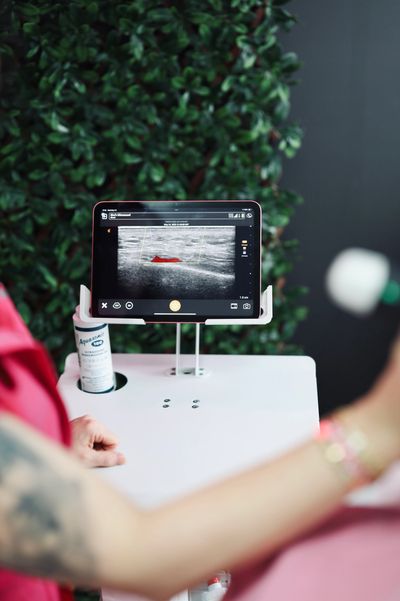
Facial ultrasound uses high-frequency sound waves to create real-time images of the structures beneath the skin. In aesthetic medicine, it can provide valuable information about facial anatomy and allow trained providers to visualize structures that cannot be seen from the surface alone.
Ultrasound can be used to assess existing dermal filler, blood vessels, tissue layers and other relevant anatomical structures, helping provide additional information for treatment planning and assessment.
At Uplifted Medical, facial ultrasound may be incorporated into injectable treatments, used to assess previous filler or areas of concern, and assist with targeted filler dissolving when appropriate.
advanced training in facial ultrasound
The use of ultrasound in aesthetic medicine is more than a trend. Nurse Practitioner Kim Macpherson has trained with some of the pioneers of this practice worldwide - including Dr. Steven Harris, Dr. Leonie Schelke, and PA Nicola Lowry. With her education and dedication to staying at the cutting edge of non-surgical treatments, Kim Macpherson, NP brings a high level of expertise to Uplifted Medical.
At Uplifted Medical, patients can trust they are receiving care that blends art, science, and technology in the most effective and responsible way possible. Whether you are exploring injectables for the first time or seeking advanced solutions with improved safety, our ultrasound-guided approach ensures every treatment is grounded in knowledge and a patient-first philosophy.
how we use ultrasound at uplifted medical
ultrasound assessment before injectable procedures
Previous injectable treatments can make future treatment planning more complex, particularly when it is unclear how much filler remains or exactly where it is located.
Facial ultrasound can help assess existing dermal filler, relevant anatomy and previously treated areas before additional treatment is performed. This information can help determine whether adding more filler is appropriate or whether an alternative approach, such as dissolving existing filler, should be considered.
At Uplifted Medical, ultrasound may be incorporated into pre-treatment assessment when clinically appropriate to support individualized, anatomy-focused treatment planning.
ultrasound guided injectable treatments
Facial ultrasound can also be used during injectable procedures to provide real-time visualization beneath the skin.
When appropriate, ultrasound guidance allows the provider to visualize relevant anatomical structures and guide the depth and placement of injectable products in real time. This can be particularly valuable in previously treated areas, areas with existing filler, or when additional anatomical information would be beneficial.
Ultrasound does not eliminate the risks associated with injectable treatments, but it provides an additional source of information that can support precise, informed treatment planning and product placement.
Filler complication assessment & ultrasound guided dissolving
Facial ultrasound can be particularly valuable when assessing concerns related to previous dermal filler treatments, including migration, persistent swelling, lumps or nodules, asymmetry, unwanted filler placement and other areas of concern.
Ultrasound can provide additional information about the location and distribution of existing hyaluronic acid filler and surrounding structures, helping guide clinical assessment and determine an appropriate treatment plan.
When dissolving is indicated, ultrasound may also be used to help target hyaluronidase to identified areas of hyaluronic acid filler, rather than treating an area based on surface appearance alone.
Not every filler concern requires dissolving. Our approach begins with assessment to better understand what may be contributing to the concern before recommending treatment.
frequently asked questions about facial ultrasound
Can ultrasound show where my filler is?
Yes. High-frequency facial ultrasound can often be used to visualize hyaluronic acid dermal filler beneath the skin and provide information about its location and distribution. This can be especially helpful if you have had filler treatments in the past and are unsure how much product may remain or where it is located.
Can ultrasound tell if my filler has migrated?
Facial ultrasound can help assess the location and distribution of existing filler and may provide useful information when filler migration is suspected. Ultrasound findings are considered alongside your treatment history, physical assessment and symptoms to determine what may be contributing to your concern.
Can you assess filler that was injected at another clinic?
Yes. You do not need to have received your original filler treatment at Uplifted Medical. We can assess concerns related to filler placed at another clinic, including migration, lumps, persistent swelling, asymmetry, unwanted filler or uncertainty about previously injected product.
Can you dissolve filler using ultrasound?
Yes. When appropriate, ultrasound can be used to help identify areas of hyaluronic acid filler and guide the placement of hyaluronidase, the enzyme used to dissolve hyaluronic acid filler. This allows treatment to be directed toward identified areas of filler rather than relying on surface appearance alone.
Does all old filler need to be dissolved before having more filler?
No. The presence of previous filler does not automatically mean it needs to be dissolved. The decision depends on factors such as its location and distribution, your anatomy, treatment goals and whether the existing filler is contributing to an unwanted result.
Our approach is to assess what is already present before deciding whether additional filler, dissolving or no treatment at all is most appropriate.
Can ultrasound identify what brand of filler I have?
Not reliably. Ultrasound can provide information about the presence, location and characteristics of material beneath the skin, but it generally cannot determine the specific brand of dermal filler that was previously injected.
If available, records from your previous injector detailing the product used, treatment area and amount injected can be helpful during your assessment.
Can ultrasound make filler injections safer?
Ultrasound provides additional anatomical information that can support treatment planning and may help a trained provider identify relevant structures beneath the skin before or during an injection.
However, ultrasound does not eliminate the risks associated with dermal filler injections. It is one tool used alongside detailed knowledge of facial anatomy, appropriate injection technique, clinical assessment and complication-management protocols to support informed treatment.
What types of filler can hyaluronidase dissolve?
Hyaluronidase is used to dissolve hyaluronic acid (HA) dermal fillers, which include many commonly used injectable fillers.
It does not dissolve non-hyaluronic acid products such as Sculptra® or Radiesse®. An assessment is therefore important before treatment, particularly when you are unsure which product was previously injected.
Do I need a referral for a facial ultrasound assessment?
No. A referral is not required to book a facial ultrasound assessment at Uplifted Medical.
You can book an assessment if you have concerns about previous dermal filler, would like to better understand what filler may still be present, or would like an assessment before considering additional injectable treatment.